Red Light Therapy & the Vibration Plate
Two experiences, coordinated recovery
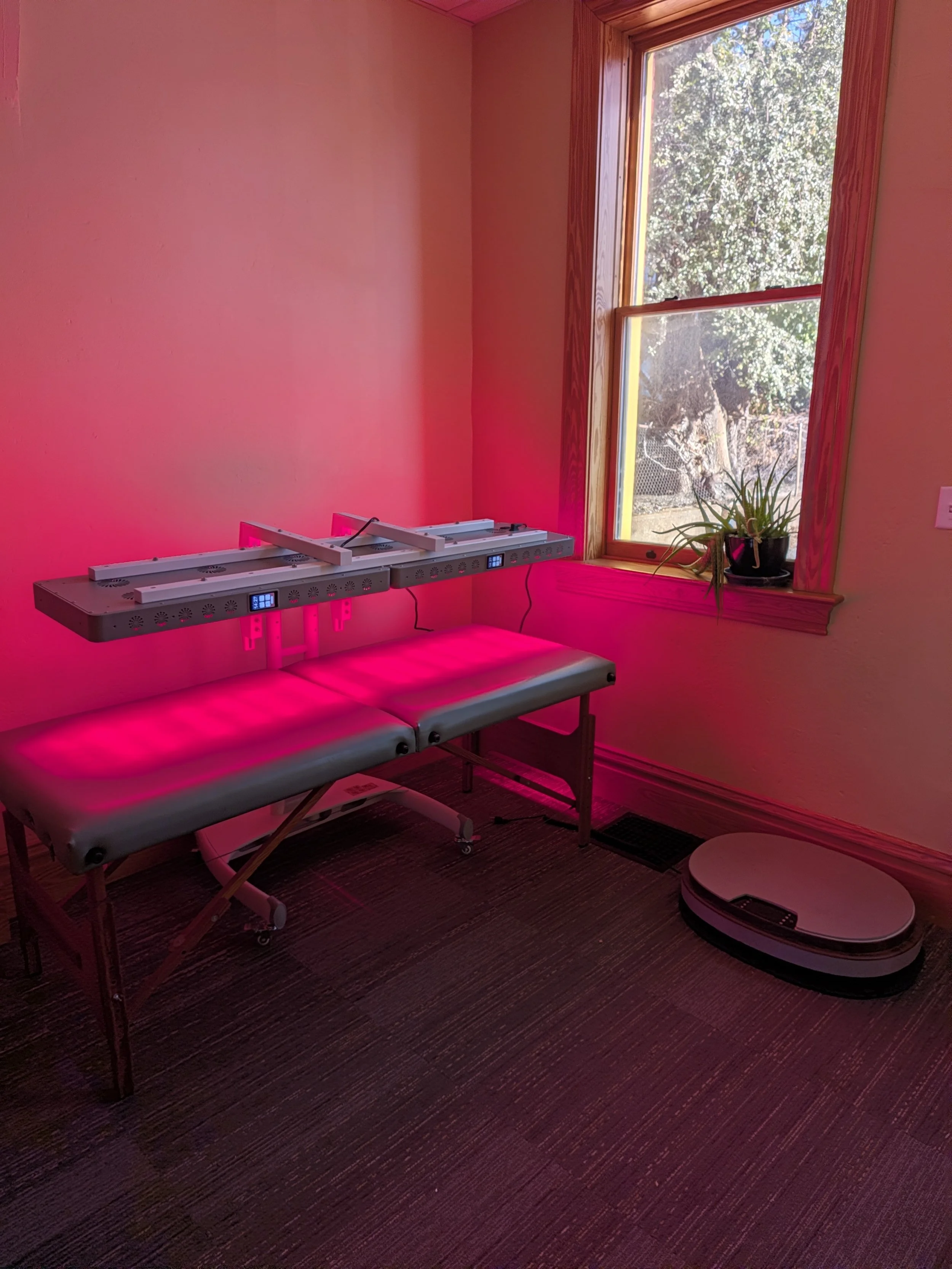
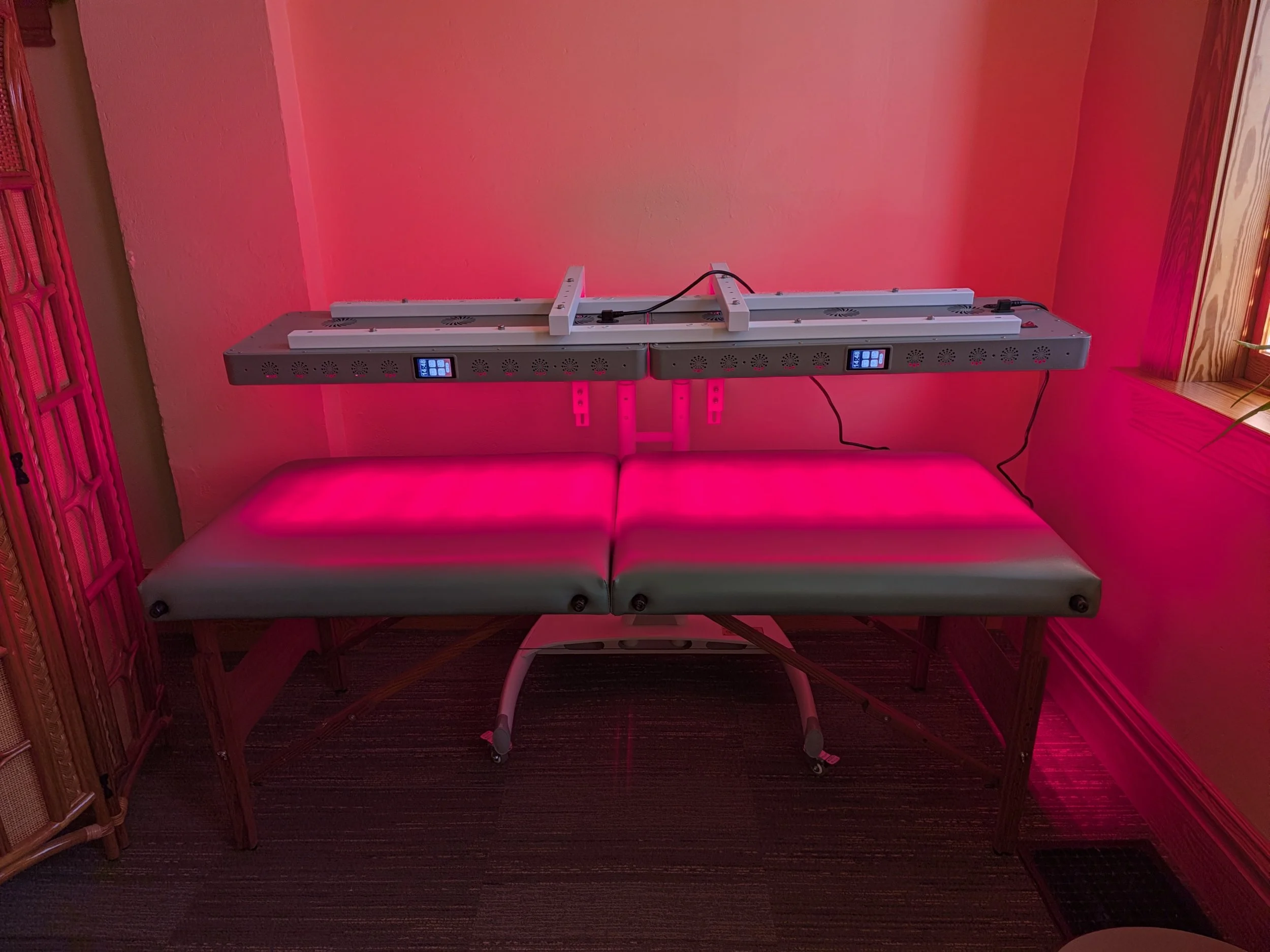
Light, at the cellular level
Light is beyond simply what we can see. It exists across a broad electromagnetic spectrum, made up of wavelengths ranging from short to long. The sun naturally emits this full spectrum, including visible light, ultraviolet light, and infrared light.
Red light sits at the longer-wavelength end of the visible spectrum, just before infrared. Near-infrared light extends beyond what the human eye can see. These particular wavelengths and their potential impacts on humans have become an area of growing interest.
Red and near-infrared light interact with the body at a cellular level. Unlike shorter wavelengths, these wavelengths can penetrate beyond the skin's surface and interact with structures within our tissues.
One area of particular interest is the mitochondria, often referred to as the powerhouses of our cells. Mitochondria are responsible for producing ATP (adenosine triphosphate), the energy that fuels cellular activity. Research shows that red and near-infrared light can influence mitochondrial function and ATP production, supporting processes involved in cellular energy, recovery, and tissue health.
Vibrations
The vibration plate uses gentle, rapid vibrations to stimulate muscle contractions. As your muscles respond to the movement, they engage in balance, stabilization, and activation, encouraging circulation and supporting the body's natural recovery processes.
Red light therapy and the vibration plate are offered as a combined session because of the layered therapeutic benefits both cellularly and muscularly. Each scheduled session is 30 minutes with a general recommendation to use the red light for 15 minutes and the vibration plate for 10 minutes.